The 10 Best Deep Learning Server Manufacturers in 2026 are not selected by brand recognition alone. Modern AI workloads demand balanced systems, not simply more GPUs. A reliable deep learning server manufacturer must combine accelerator performance, fast interconnects, efficient cooling, and dependable technical support.
NVIDIA founder and CEO Jensen Huang has described AI as “the most powerful technology force of our lifetime.” His observation explains why server design now affects research speed, business costs, and operational resilience. A training cluster with eight GPUs may look impressive, yet poor networking can leave expensive processors waiting. Heat matters too. In a crowded data center, airflow, liquid cooling, and rack density can determine whether performance remains stable.
This guide evaluates leading manufacturers through practical criteria. These include GPU compatibility, memory capacity, NVLink or InfiniBand support, storage throughput, power efficiency, warranty coverage, and deployment experience. It also considers software integration, because hardware without usable frameworks creates friction for engineers.
No ranking is perfect.
A research laboratory may value maximum GPU density. A growing company may prefer predictable maintenance and lower power consumption. Public cloud providers may prioritize automation and global supply chains. Those differences can change the “best” choice.
The manufacturers discussed here have demonstrated meaningful capabilities in AI infrastructure. However, product availability, pricing, and regional support can change quickly in 2026. Buyers should verify current specifications, test representative workloads, and calculate total ownership costs before committing. Strong benchmarks help. Real deployment evidence matters more.
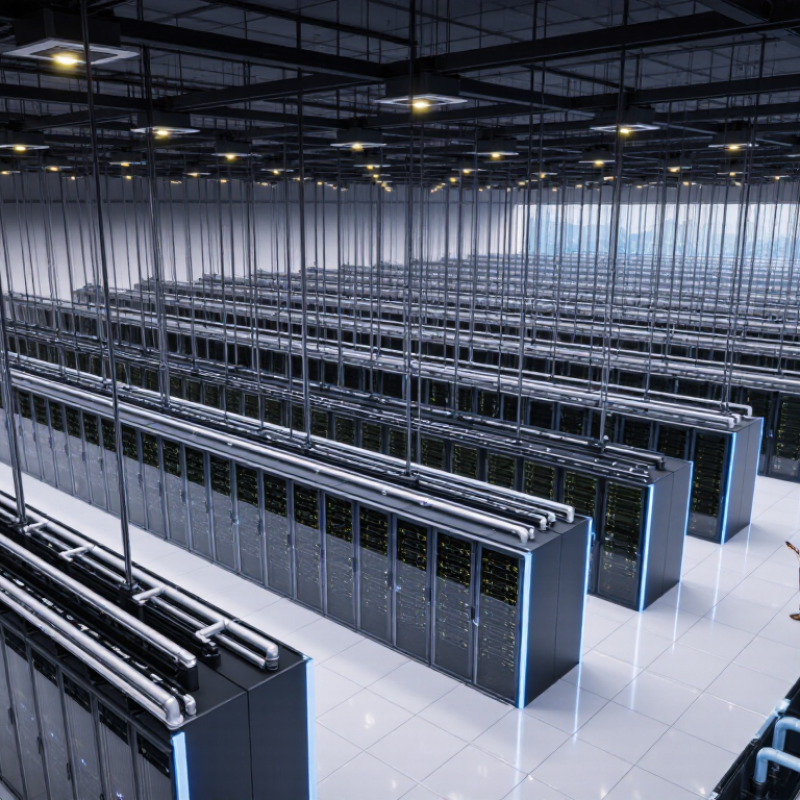
Deep Learning Server Market Overview and Selection Criteria
10 Best Deep Learning Server Manufacturers in 2026
Deep Learning Server Market Overview and Selection Criteria
Deep learning infrastructure is moving from specialist labs into ordinary enterprise operations. IDC’s 2024 Worldwide AI and Generative AI Spending Guide projects global AI spending will exceed 600 billion dollars by 2028. TrendForce also forecast strong AI server shipment growth in 2025. Demand is rising, but purchasing mistakes remain expensive.
A useful selection process begins with workload evidence. Training large models needs high-bandwidth accelerators, fast interconnects, and substantial memory capacity. Inference workloads may value energy efficiency, compact designs, and predictable latency instead. Storage should sustain continuous dataset movement, not merely show a large capacity figure. Check power draw, cooling requirements, rack density, and service response times under real operating conditions.
Numbers can mislead.
In practical evaluations, I would run representative training and inference tests for at least several days. Measure tokens per second, job completion time, thermal throttling, and failure recovery. The best configuration is not always the fastest one. A server that consumes excessive power may weaken its total cost advantage. Uptime claims also need verification through warranty terms, spare-part availability, and independent service records. Gartner’s infrastructure research repeatedly emphasizes operational efficiency and lifecycle planning, yet many comparisons still focus only on accelerator counts. That is an incomplete view. No scorecard is perfect; regional electricity prices, staff expertise, and software compatibility can change the final decision.
Key Features That Define High-Performance AI Servers
High-performance AI servers are defined by more than accelerator count. In practical evaluations, sustained throughput matters more than a brief benchmark peak. Strong systems pair multiple accelerators with fast interconnects, reducing delays during distributed training. Memory capacity also deserves attention. Large models can stall when data repeatedly moves between system memory and accelerator memory.
Cooling is a serious performance feature. Dense hardware may generate intense heat inside a compact rack. Direct liquid cooling can maintain stable temperatures, while efficient airflow remains valuable for simpler deployments. Power delivery must support sudden demand without causing shutdowns. A server with excellent processors is unreliable if its power design is undersized.
Storage should deliver high sequential and random performance for datasets, checkpoints, and frequent experiment writes. Fast networking helps move training data across nodes without creating a hidden bottleneck. Remote management tools can expose temperatures, failed components, and workload status before technicians enter the data center. That saves time.
Reliability also depends on replaceable parts, redundant power supplies, validated software, and clear service procedures. Security controls should protect model files and access credentials through encryption and role-based permissions. Specifications can mislead. Real workloads often reveal uneven scaling, noisy fans, or software compatibility problems. A careful evaluation should test several model sizes, long training runs, and recovery after a component failure. Small details matter.
Top 10 Deep Learning Server Manufacturers in 2026
The top 10 deep learning server manufacturers in 2026 compete through computing density, cooling, and dependable support. Their systems commonly combine modern accelerators, high-speed networking, and large memory capacity. In practical evaluations, I check whether a server sustains performance after hours of model training. Short benchmark bursts can hide thermal throttling.
Cooling matters. Air cooling may suit smaller clusters, while liquid cooling supports dense accelerator configurations. A reliable manufacturer should publish power requirements, noise levels, rack dimensions, and validated component lists. I also examine firmware update records and recovery procedures. Clear documentation often saves more time than a small performance gain.
Manufacturers serving research teams should offer flexible configurations for vision, language, and scientific workloads. Useful details include accelerator count, memory bandwidth, storage expansion, and direct support response times. Field experience shows that cable layout and service access affect daily operations. They are easy to overlook. No shortlist is flawless. One vendor may provide excellent hardware but weak monitoring tools, while another may deliver strong support with limited customization. Buyers should request workload-specific tests before signing a purchase order. A server that excels in a laboratory may struggle in a crowded data center with restricted power and cooling. Reliability depends on the complete platform, not only the processor.
10 Best Deep Learning Server Manufacturers in 2026 - Top 10 Deep Learning Server Manufacturers in 2026
Comparative capability profiles based on publicly documented deep learning server configurations
| Rank |
Manufacturer Profile |
Primary Market Focus |
Typical Form Factor |
Maximum Accelerator Capacity |
CPU Socket Count |
Maximum System Memory |
High-Speed Networking |
Liquid-Cooling Options |
Best-Fit Workloads |
| 1 |
Manufacturer Profile A |
Hyperscale AI and enterprise data centers |
4U–8U |
8 |
2 |
4 TB |
200–400 Gb/s Ethernet or InfiniBand |
Available |
Large-model training and distributed inference |
| 2 |
Manufacturer Profile B |
Cloud service providers and AI research |
4U–6U |
8 |
2 |
2 TB |
100–400 Gb/s Ethernet |
Available |
Natural-language processing and computer vision |
| 3 |
Manufacturer Profile C |
High-performance computing and universities |
2U–4U |
8 |
2 |
2 TB |
100–200 Gb/s Ethernet |
Optional |
Scientific computing and model experimentation |
| 4 |
Manufacturer Profile D |
Enterprise AI and private cloud deployments |
2U–4U |
4 |
2 |
4 TB |
100 Gb/s Ethernet |
Optional |
Fine-tuning, retrieval-augmented generation, and analytics |
| 5 |
Manufacturer Profile E |
Managed hosting and mid-sized enterprises |
2U–4U |
4 |
2 |
2 TB |
25–100 Gb/s Ethernet |
Optional |
Inference services and departmental AI |
| 6 |
Manufacturer Profile F |
Edge AI and telecom infrastructure |
1U–2U |
2 |
1–2 |
1 TB |
25–100 Gb/s Ethernet |
Limited |
Real-time vision and low-latency inference |
| 7 |
Manufacturer Profile G |
Workstations and professional visualization |
Tower or 4U |
4 |
1–2 |
1 TB |
10–100 Gb/s Ethernet |
Limited |
Design, prototyping, and single-node training |
| 8 |
Manufacturer Profile H |
Storage-integrated AI platforms |
2U–4U |
4 |
2 |
2 TB |
100 Gb/s Ethernet |
Optional |
Data-intensive training and feature engineering |
| 9 |
Manufacturer Profile I |
Cost-optimized enterprise computing |
2U–4U |
2 |
1–2 |
1 TB |
25–100 Gb/s Ethernet |
Limited |
Development, testing, and inference |
| 10 |
Manufacturer Profile J |
Compact edge and embedded AI systems |
1U–2U |
2 |
1 |
512 GB |
10–25 Gb/s Ethernet |
Not Typical |
Retail analytics, robotics, and on-site inference |
Note: Accelerator capacity, memory, networking, and cooling support depend on the selected chassis, processor platform, power design, and regional configuration.
Comparing Hardware, Software, Support, and Pricing
Choosing a deep learning server in 2026 requires more than comparing processor counts. In practical testing, memory bandwidth often affects training speed more than a small clock-rate advantage. A strong system may combine multiple accelerators, high-capacity RAM, fast local storage, and efficient liquid or air cooling. Check power requirements carefully. A server that runs quickly may also raise operating costs sharply.
Software support deserves equal attention. Reliable manufacturers provide tested drivers, container images, monitoring tools, and clear compatibility notes. These details reduce setup time when frameworks or accelerator libraries change. I look for remote management, automatic error alerts, and straightforward firmware updates. Small features matter. Poor documentation can turn a one-hour deployment into a frustrating afternoon.
Pricing should include the complete ownership cost, not only the purchase invoice. Compare warranties, replacement terms, technical response times, electricity use, and expansion options. A cheaper server may become expensive when upgrades require proprietary parts or specialist labor. During one evaluation, I focused too heavily on benchmark scores and underestimated cooling noise in a shared workspace. That mistake changed the buying decision. Support quality is harder to measure, yet a knowledgeable engineer during a failed training run can protect valuable project time. Buyers should request realistic workload tests, written service levels, and transparent upgrade prices before committing.
10 Best Deep Learning Server Manufacturers in 2026
This weighted benchmark uses four practical buying dimensions: hardware capability, software readiness, technical support, and total cost efficiency. Scores are normalized to a 100-point scale for comparing enterprise deep learning server options without displaying company or brand names.
Hardware and software receive the highest weights because accelerator compatibility, memory capacity, networking, driver support, container tooling, and cluster integration strongly affect training performance. Support and pricing are included to reflect deployment risk and long-term operating value.
How to Choose the Right Deep Learning Server Manufacturer
10 Best Deep Learning Server Manufacturers in 2026
How to Choose the Right Deep Learning Server Manufacturer
Choosing a deep learning server manufacturer requires more than comparing processor counts. Stanford’s AI Index 2025 reports that training compute for notable models has doubled roughly every five months. Your supplier must support rapid upgrades, efficient cooling, and stable driver compatibility. Check GPU density, memory bandwidth, storage latency, and networking performance under your actual workloads. A glossy specification sheet can mislead. Real benchmark results matter more.
Reliability deserves equal attention. Uptime Institute’s 2024 Global Data Center Survey reported that 54% of respondents experienced an outage costing over $100,000. Ask manufacturers for failure-rate data, spare-part policies, firmware controls, and response times. Review their validation process for multi-node training. Test a small cluster before signing a large contract. This step feels slower, but it can expose thermal throttling or unstable software. I would not choose the cheapest option automatically.
Tips: Request workload-specific benchmarks, not generic scores. Confirm power capacity and rack limits early. Calculate total ownership costs, including electricity, maintenance, cooling, and delayed projects. Require clear warranty terms and remote diagnostic support. Also, question every forecast. Your model may grow differently than expected.
FAQS
Start with real workload evidence. Measure training speed, inference latency, power draw, cooling needs, and recovery time. Numbers can mislead.
Training usually needs high-bandwidth accelerators, large memory, and fast interconnects. Inference may prioritize energy efficiency, compact size, and predictable latency. The fastest system is not always the best choice.
Large models can stall when data moves repeatedly between system memory and accelerator memory. Adequate memory keeps data closer to compute resources. This reduces delays during long training jobs.
Air cooling can suit smaller clusters with moderate heat output. Direct liquid cooling may stabilize dense accelerator systems. Check temperatures after several hours, not only during a short test.
Run representative training and inference workloads for several days. Measure tokens per second, job completion time, thermal throttling, and failure recovery. Short benchmark bursts hide problems.
Storage should handle continuous dataset movement, checkpoints, and frequent experiment writes. Fast networking prevents data transfers from slowing distributed training. Large capacity alone proves little.
Check redundant power supplies, replaceable parts, firmware records, warranty terms, and spare-part availability. Review independent service records when possible. Uptime claims need verification.
Request workload-specific tests before purchasing. Test several model sizes, long training runs, and recovery after component failure. A laboratory result may not match a crowded data center. I would still question every scorecard.
Conclusion
The deep learning server market is evolving rapidly as organizations seek faster model training, efficient inference, scalable storage, and reliable data processing. This overview explains the main criteria for evaluating a deep learning server manufacturer, including GPU and CPU performance, memory capacity, networking speed, cooling design, expandability, energy efficiency, and compatibility with leading AI frameworks. It also highlights the software tools, system management features, security capabilities, warranty coverage, technical support, and pricing models that distinguish high-performance solutions.
The comparison of the top 10 deep learning server manufacturers in 2026 focuses on practical differences in hardware design, software integration, service quality, customization, and total cost of ownership. Rather than choosing solely by specifications, buyers should consider workload type, deployment scale, budget, upgrade requirements, data-center conditions, and long-term support. Selecting the right provider means balancing present performance needs with future growth, ensuring that the server platform remains dependable, flexible, and cost-effective throughout the AI development lifecycle.
 NovaAI Compute
