NovaAI Compute NovaAI Compute

What is an AI Server Factory and How Does It Work?

Time:2026-06-10 Author:Sienna
0%

The concept of an "AI server factory" has emerged as a significant trend in technology. It represents a dedicated facility where artificial intelligence servers are manufactured and deployed. Dr. Emily Zhao, an expert in AI infrastructure, emphasizes, "An AI server factory streamlines production while enhancing efficiency in AI processing." This underscores the importance of optimizing resources in a rapidly growing market.

AI server factories are designed to meet the growing demand for advanced computing power. These facilities integrate cutting-edge hardware and optimized software. They enable businesses to develop and deploy AI applications more effectively. However, the industry faces challenges, like balancing innovation with sustainability. Each factory may operate differently, reflecting the unique needs of its clients.

As AI applications expand across various sectors, the demand for capable infrastructure increases. Yet, the speed of change can lead to oversights. Companies must consider the long-term implications of their investments in AI server factories. The future may hold vast potential, but it also requires careful reflection on industry practices and ethical considerations.
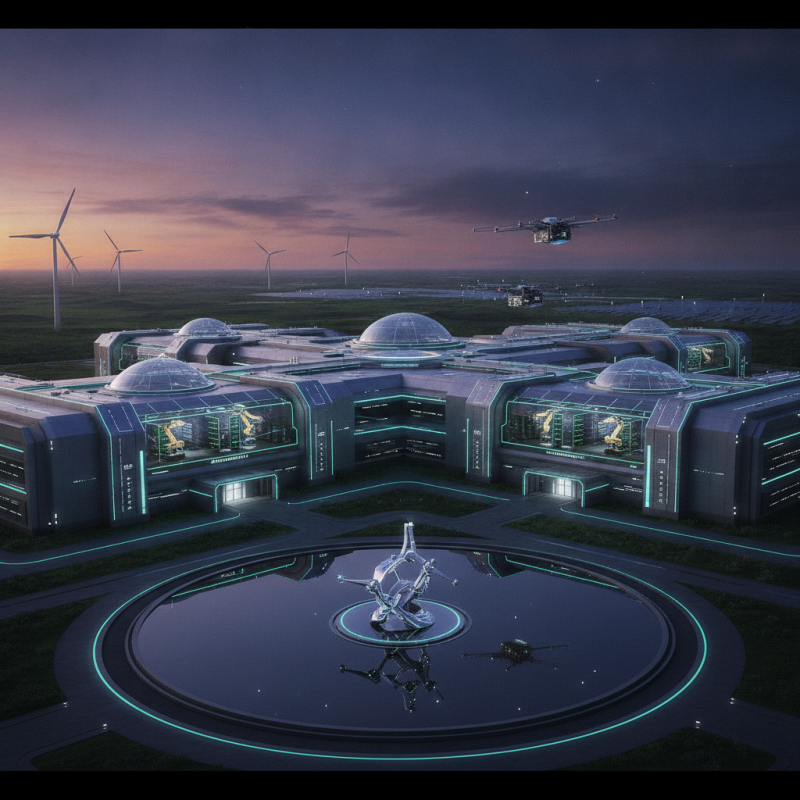
What is an AI Server Factory and How Does It Work?

Definition of an AI Server Factory and its Purpose

An AI Server Factory is a specialized facility designed to manufacture and optimize servers for artificial intelligence applications. These factories employ advanced technologies to ensure efficiency in production. The primary purpose of an AI Server Factory is to create powerful computing systems that can handle complex algorithms and massive datasets for AI processes.

In these factories, various components are assembled to build high-performance AI servers. The focus is on optimizing hardware like GPUs and CPUs to ensure rapid processing speeds. Each server usually undergoes rigorous testing to guarantee its reliability and performance. This is crucial in AI since even minor hardware flaws can lead to significant failures in applications.

However, not all factories operate flawlessly. Some may face challenges in managing supply chains or adapting to the rapid changes in technology. Ensuring quality control can be demanding, especially with evolving AI requirements. It is essential for operators to continually assess their processes and improve their production methods. This continuous reflection is vital to maintaining a competitive edge in the fast-paced AI landscape.

Key Components of an AI Server Factory

An AI server factory is a specialized facility designed to build and optimize AI computing infrastructure. At its core, several key components form the backbone of this factory. One of the most critical components is the hardware. High-performance processors, GPUs, and TPUs are essential. These components handle complex computations, which are the lifeblood of AI algorithms.

Another vital aspect is efficient cooling systems. Servers generate heat, which can affect performance. Proper cooling ensures that machines can operate at peak efficiency. Additionally, software plays a significant role. The factory utilizes advanced software for management and orchestration. This software streamlines processes, improving speed and reliability.

Networking capabilities are equally important. Fast and reliable data transfer enables smooth communication between servers. Lastly, storage solutions must be scalable. AI workloads can demand significant data capacity that grows over time. A responsive infrastructure, however, can sometimes face challenges in scalability. Adjusting to rapid advancements in AI technology requires continuous reflection. Even in a well-structured environment, balancing performance with cost remains a struggle for many operators.

How AI Server Factories Operate: Processes and Workflows

AI server factories are specialized environments designed to streamline the production and deployment of artificial intelligence systems. They incorporate advanced technologies and workflows to enhance efficiency and scalability. In these facilities, various components, such as hardware and software, are meticulously integrated to support AI applications. The setup typically involves collaborative spaces where engineers and computer scientists work closely together.

The workflows in an AI server factory are diverse. They often start with the design phase, where specific requirements are analyzed. Next, prototypes are created and tested rigorously. Continuous improvements are made based on feedback and performance data. This iterative process ensures that the AI systems are robust and effective. Moreover, data management plays a pivotal role in these operations. Server configurations need to be meticulously monitored and adjusted to optimize performance.

AI server factories face challenges as well. For example, ensuring data security and compliance with various regulations is complex. Moreover, the rapid pace of technological change requires constant adaptation. Teams must stay updated with trends and best practices. It is crucial for facility operators to reflect on their processes regularly. These reflections can lead to new insights, helping to enhance efficiency and reliability over time.

Benefits of Utilizing AI Server Factories for Businesses

The rise of AI Server Factories is reshaping the technological landscape for businesses. These factories automate the deployment of artificial intelligence infrastructure, enhancing efficiency and productivity. According to a recent report by Gartner, AI applications will create over 2.3 million new jobs by 2025. This shift indicates a growing reliance on AI-driven solutions across various sectors.


Utilizing AI Server Factories translates to significant operational benefits. Companies can reduce deployment times by 40%. This speed allows businesses to adapt quickly to market changes. Moreover, AI Server Factories can optimize resource allocation, leading to a 30% decrease in operational costs. As businesses strive for competitive advantage, these factories provide the agility needed to innovate and meet consumer demands effectively.


However, organizations should approach these technologies cautiously. Not all enterprises may have the infrastructure to fully leverage AI capabilities. Integration challenges can lead to underperformance if not handled properly. Studies show that 61% of companies struggle with AI adoption due to data silos and inadequate expertise. A thoughtful strategy is crucial in maximizing the advantages of AI Server Factories while avoiding potential pitfalls.

Future Trends and Developments in AI Server Factory Technology

The landscape of AI server factory technology is evolving rapidly. These facilities are designed for efficient AI model training and deployment. As companies expand their AI capabilities, the demand for tailored server solutions grows. This drives innovation in hardware design and software architecture.

Future trends suggest a shift towards more integrated systems. These systems will combine powerful CPUs and GPUs optimized for AI workloads. Energy efficiency will become a priority, as data centers face rising operational costs. New cooling techniques and sustainable practices are being explored to improve efficiency.

Additionally, as the technology matures, there may be challenges. The complexity of AI models can lead to difficulties in scaling resources. Companies might struggle to balance performance with infrastructure investments. Continuous adaptation and learning will be essential for staying ahead in this fast-paced field.

AI Server Factory Capacity vs. Year

FAQS

: What are the key components of an

I server factory?

How do AI server factories improve efficiency?

They streamline production processes and integrate various components to support AI applications, enhancing overall efficiency and scalability.

What role does data management play in these factories?

Data management ensures server configurations are monitored and adjusted to optimize performance continuously, which is vital for success.

What challenges do AI server factories face?

Challenges include ensuring data security, compliance with regulations, and adapting to rapid technological changes that require constant learning.

How do AI server factories impact operational costs?

They can lead to a 30% decrease in operational costs by optimizing resource allocation and speeding up deployment times by 40%.

What is a common struggle for businesses adopting AI technologies?

Many organizations face integration challenges and underperformance, largely due to data silos and inadequate expertise in AI.

Why is reflecting on processes important for facility operators?

Regular reflection helps teams identify insights and improve efficiency and reliability in their operations, which is crucial for success.

What benefits do businesses gain from using AI server factories?

They gain agility in adapting to market changes and can harness AI solutions to meet consumer demands effectively, enhancing competitiveness.

How should organizations approach AI server factory technologies?

A thoughtful strategy is essential to maximize advantages while avoiding pitfalls associated with infrastructures that may not fully support AI capabilities.

What impact could AI applications have on job creation?

AI applications are expected to create over 2.3 million new jobs by 2025, highlighting the growing reliance on AI solutions in various sectors.

Conclusion

An AI server factory is a specialized facility designed to produce and manage high-performance AI infrastructure. Its primary purpose is to streamline the deployment of artificial intelligence applications by integrating key components such as powerful computing hardware, optimized software, and robust networking solutions. The operational processes within an AI server factory involve precise workflows that encompass design, assembly, and maintenance, ensuring efficiency and scalability.

Utilizing AI server factories offers significant benefits for businesses, including reduced operational costs, improved processing speeds, and enhanced capabilities for data analysis. As technology evolves, future trends in AI server factory development are likely to focus on automation, sustainability, and increased customization, allowing organizations to stay competitive in the rapidly advancing AI landscape.

Sienna

Sienna

Sienna is a skilled marketing professional with a deep expertise in our company’s core products and services. With a passion for innovation and detail, she plays a pivotal role in crafting insightful blog posts that not only highlight the unique features of our offerings but also provide valuable......