NovaAI Compute NovaAI Compute

How to Choose a Data Center AI Server Manufacturer in 2026?

Time:2026-09-15 Author:Henry
0%

Choosing a data center ai server manufacturer in 2026 requires more than comparing processor names or advertised speeds. AI infrastructure now depends on power efficiency, cooling design, memory capacity, networking, and dependable software support. A server that performs well in a laboratory may struggle inside a crowded rack with strict power limits.

This guide examines the practical factors that influence a reliable purchasing decision. It considers GPU compatibility, accelerator availability, liquid and air cooling options, firmware quality, cybersecurity practices, and long-term maintenance. Buyers should also review warranty terms, replacement timelines, technical documentation, and the manufacturer’s experience with large-scale deployments. A clear service-level agreement matters when one failed node can delay model training for several days.

Real evidence is valuable. Ask for workload benchmarks that reflect your environment, not only ideal test results. Request references from organizations with similar model sizes, rack densities, and compliance requirements. Inspect how the manufacturer handles component shortages and software updates. Small details matter.

No supplier is perfect.

A careful evaluation should acknowledge trade-offs. The fastest server may consume too much electricity. A lower-cost platform may create higher integration expenses later. Even published performance figures can change with drivers, datasets, and cooling conditions. This article provides a structured framework for comparing manufacturers with professional judgment, measurable criteria, and realistic expectations. It aims to help technology leaders select a partner that can support present workloads while adapting to future AI demands. Reliability is not promised by a logo; it is demonstrated through evidence, support, and consistent operation.
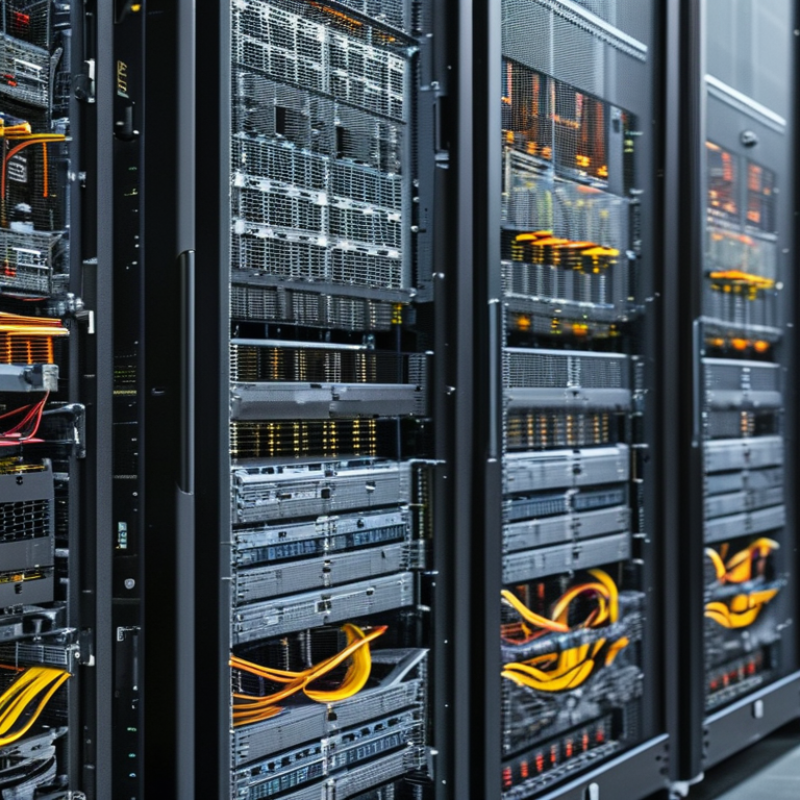
How to Choose a Data Center AI Server Manufacturer in 2026?

Defining Data Center AI Server Requirements for 2026

Choosing a data center AI server manufacturer in 2026 starts with a clear definition of need. Do not begin with a glossy product sheet. Begin with workloads. Training, retrieval-augmented generation, simulation, and real-time inference demand different designs. For large model training, measure accelerator count, memory capacity, memory bandwidth, and GPU-to-GPU interconnect speed. An inference cluster may value lower latency, dense rack packing, and predictable response times. Write these targets in numbers, such as tokens per second, training hours, or requests per second. Vague goals make fair manufacturer comparisons difficult.

Power and cooling belong in the requirement document. A high-density rack can exceed the limits of an older room. Record available power, inlet temperature, floor loading, network capacity, and maintenance clearance. Specify liquid cooling only when facilities and technicians can support it safely. Storage should sustain checkpoint traffic without starving compute nodes. Security requirements also need detail, including secure boot, hardware root of trust, access logging, and controlled firmware updates.

When evaluating manufacturers, request workload-based benchmarks, not only peak accelerator numbers. Ask for test conditions, replacement times, spare-part policies, firmware support, and local technical expertise. An honest supplier should explain limitations and publish measurable service commitments. Pilot testing matters. Run a small cluster with your own models, data pipelines, and monitoring tools. We often underestimate networking and cooling during planning. That mistake is expensive to correct. Leave expansion space, but avoid paying for capacity your team cannot operate.

Evaluating GPU, CPU, Memory, and Networking Capabilities

Choosing an AI server manufacturer in 2026 requires more than comparing GPU counts. The International Energy Agency’s Electricity 2024 report estimates that data center electricity demand could exceed 1,000 TWh annually by 2026. Therefore, GPU performance per watt matters as much as peak throughput. Ask manufacturers for measured results under sustained workloads, not short laboratory bursts.

GPU memory capacity and bandwidth determine whether large models run efficiently or depend on slower storage. CPU selection also matters. A weak processor can delay data preparation and leave expensive accelerators idle. Check memory channels, NUMA design, PCIe availability, and thermal behavior. Stanford’s AI Index 2025 reports a dramatic decline in inference costs, but lower cost does not guarantee efficient deployment. Workloads differ.

Networking deserves equal attention. Evaluate 400 or 800 Gb/s links, RDMA support, switch latency, and network oversubscription. Distributed training can lose efficiency when communication interrupts computation. Uptime Institute’s Global Data Center Survey 2024 continues to show that outages remain a serious operational concern, making redundant power, cooling, and network paths essential. I would request customer references, repair-time records, firmware policies, and transparent benchmark methods. Specifications can look impressive. Real performance is messier. A manufacturer that admits limitations may deserve more trust than one promising perfect scalability.

Comparing Manufacturer Reliability, Support, and Customization

How to Choose a Data Center AI Server Manufacturer in 2026?

Comparing Manufacturer Reliability, Support, and Customization

Choosing a data center AI server manufacturer in 2026 requires more than comparing GPU counts. Reliability appears in boring details: documented burn-in tests, component traceability, firmware controls, and failure-rate reporting. Ask for sample validation reports, not polished claims. A serious manufacturer can explain system behavior after repeated thermal cycles and sustained inference loads. That evidence matters.

Support should be tested before purchase. Send technical questions about rack power, liquid cooling, BIOS settings, and replacement timelines. Measure response quality, not just response speed. Can the support team identify a failing memory module remotely? Can it provide a tested spare within your region? Clear escalation paths, named engineers, and 24/7 monitoring reduce downtime. Service-level promises still have practical limits. No manufacturer is perfect.

Customization should solve an operational problem, not decorate a proposal. Useful options include validated GPU configurations, redundant power, higher-memory nodes, airflow adjustments, and secure remote management. Request a pilot rack with your workload, then compare energy use, temperature stability, and job completion time. A configuration that looks efficient in a spreadsheet may disappoint under real workloads. That is worth admitting.

How to Choose a Data Center AI Server Manufacturer in 2026?

The chart compares three practical procurement dimensions using a 100-point evaluation framework: manufacturer reliability, technical support, and customization capability. Reliability emphasizes validated quality processes, production consistency, and supply-chain resilience; support reflects critical-incident response targets and service coverage; customization measures the ability to adapt GPU configurations, networking, power, cooling, and rack integration.

Assessing Security, Energy Efficiency, and Total Ownership Costs

How to Choose a Data Center AI Server Manufacturer in 2026?

Security, energy efficiency, and total ownership cost should guide an AI server decision. Security starts before delivery. Ask whether the manufacturer supports secure boot, signed firmware, hardware-rooted identity, and a current software bill of materials. Require patch timelines and independent penetration testing. Uptime Institute’s 2024 outage analysis reported that 54% of respondents experienced a serious outage costing over $100,000. A weak management controller can become an expensive blind spot.

Energy figures need practical testing. The International Energy Agency estimates data centers used about 415 TWh globally in 2024, with demand potentially reaching 945 TWh by 2030. Compare performance per watt, not only accelerator speed. Request measured results at your workload, rack density, and inlet temperature. Check liquid-cooling compatibility, fan control, power-supply efficiency, and heat-reuse options. A faster server may waste money if cooling capacity is limited.

Tips: Build a five-year TCO model. Include hardware, electricity, cooling, software licenses, labor, warranties, replacement parts, and downtime. Request three-year failure-rate data and local service response times. Verify energy claims through witnessed testing. Keep security evidence in writing. A neat spreadsheet can still mislead. My own purchasing experience suggests that support assumptions are often too optimistic, especially for specialized components. Recalculate costs after deployment data arrives, because real workloads rarely match benchmark charts.

How to Choose a Data Center AI Server Manufacturer in 2026? - Assessing Security, Energy Efficiency, and Total Ownership Costs
A brand-neutral evaluation framework for comparing AI server manufacturers. Use verified configuration-level evidence rather than marketing claims.
Evaluation Dimension Measurable KPI Recommended 2026 Decision Rule Required Evidence and Validation Method Suggested Weight
Platform Security Secure boot, hardware root of trust, and firmware integrity Require UEFI Secure Boot, TPM 2.0 support, signed firmware, firmware rollback protection, and documented protection against unauthorized component replacement. Review the security architecture, boot-chain documentation, firmware-signing process, vulnerability response policy, and an independent penetration-test summary. 15%
Vulnerability Management Security advisory coverage and remediation time Require a published vulnerability disclosure process, CVE tracking, software and firmware bills of materials where available, and contractual remediation targets for critical vulnerabilities. Examine recent security advisories, patch release history, end-of-support policy, escalation contacts, and sample incident-response procedures. 10%
Data Protection Encryption and secure data sanitization Require encryption in transit using current TLS configurations, storage encryption support, secure erase procedures, and documented media sanitization aligned with recognized data-destruction practices. Validate encryption settings, key-management integration, drive-replacement procedures, sanitization certificates, and secure decommissioning controls. 8%
AI Performance Useful performance per node and per watt Compare the same model, precision, batch size, dataset, and software stack. Measure throughput, latency, utilization, and performance per watt instead of relying only on theoretical accelerator performance. Request reproducible benchmark scripts and configuration details. Independently test representative workloads such as training, fine-tuning, inference, and distributed communication. 15%
Energy Efficiency IT power, performance per watt, and facility impact Record average and peak power at the wall. Include CPU, accelerators, memory, storage, networking, cooling, and power-conversion losses. Use facility PUE separately because PUE is a data-center metric, not a server-only metric. Require power measurements from controlled workloads, power-quality specifications, thermal design limits, and cooling requirements for both air-cooled and liquid-cooled configurations. 15%
Thermal and Rack Design Rack density, cooling compatibility, and operating temperature Confirm that the proposed system fits the rack power budget and supports the site’s cooling strategy. High-density AI nodes may require rear-door heat exchangers, direct liquid cooling, or other enhanced cooling methods. Review rack layouts, airflow direction, coolant requirements, leak-detection options, acoustic limits, inlet-temperature ranges, and facility readiness requirements. 8%
Reliability and Serviceability Availability, component replacement, and repair process Prefer redundant power supplies, field-replaceable components, remote diagnostics, out-of-band management, documented maintenance procedures, and service-level commitments appropriate to the workload. Review failure-rate data when available, warranty terms, spare-parts availability, mean-time-to-repair targets, support coverage, and on-site service capabilities. 12%
Interconnect and Scalability Distributed-training communication efficiency Evaluate accelerator-to-accelerator and node-to-node bandwidth, latency, topology, collective-communication efficiency, and support for the required network fabric and storage architecture. Request topology diagrams and measure all-reduce, all-to-all, storage throughput, congestion behavior, and scaling efficiency across the intended cluster size. 7%
Three-Year Total Cost of Ownership TCO per useful training or inference unit Calculate: acquisition cost + software and support + electricity + cooling + facility upgrades + networking + storage + spare parts + labor − residual value. Compare cost per completed training run, token, image, or inference request. Use measured power, actual workload throughput, energy tariffs, cooling assumptions, warranty pricing, staffing requirements, and a documented utilization rate. Run sensitivity analysis for energy prices and utilization. 10%
Scoring method: Rate each dimension from 0 to 5, multiply by the suggested weight, and require a minimum security score before considering price. A lower purchase price should not compensate for weak firmware controls, poor performance per watt, limited serviceability, or high three-year operating costs.

Verifying Compliance, Scalability, and Long-Term Vendor Fit

How to Choose a Data Center AI Server Manufacturer in 2026?

Compliance should be verified through evidence, not confident sales language. Request current certificates, audit scopes, renewal dates, and covered facilities. Check whether security controls apply to manufacturing, firmware updates, logistics, and technical support. A certificate for one office proves little. Ask how the manufacturer handles data residency, supply-chain screening, and vulnerability disclosure in each target region.

Scalability needs practical testing. Review thermal design, rack density, power limits, network compatibility, and accelerator availability. Request benchmark results using workloads similar to yours, not only ideal laboratory tests. A pilot rack can reveal fan noise, cooling gaps, firmware delays, and maintenance problems. Measure installation time, failure response, spare-part access, and remote diagnostics. Small details matter.

Long-term vendor fit is harder to measure. Examine warranty language, engineer coverage, training, upgrade paths, and contract change procedures. Speak with customers operating comparable clusters, if permission is available. Ask what happens when a component becomes unavailable. The answer may expose real resilience. A polished proposal is not enough. Even a careful assessment can miss hidden dependencies, especially around proprietary software and power infrastructure. Leave room for that uncertainty, and record every assumption before signing.

FAQS

How should a company define its AI server requirements?

Start with workloads, not product brochures. Training, retrieval, simulation, and inference need different designs. Record targets such as tokens per second, training hours, or requests per second. Vague goals make comparisons unreliable.

Which hardware specifications matter for large model training?

Measure accelerator count, memory capacity, memory bandwidth, and interconnect speed. Storage must handle checkpoint traffic without slowing compute nodes. Network capacity also affects cluster performance. Peak numbers alone can mislead.

What facility conditions should be checked before deployment?

Record available power, inlet temperature, floor loading, network capacity, and maintenance clearance. High-density racks may exceed older room limits. Liquid cooling requires suitable facilities and trained technicians. Leave expansion space, but avoid unused capacity.

How can manufacturers be compared fairly?

Request workload-based benchmarks with clear test conditions. Ask about replacement times, spare parts, firmware support, and local technical expertise. Compare performance at your workload, rack density, and inlet temperature. Laboratory results may not match reality.

What security features should an AI server include?

Look for secure boot, signed firmware, hardware-rooted identity, and access logging. Request a current software bill of materials. Check patch timelines and independent security testing. A weak management controller can hide serious problems.

How should energy efficiency be evaluated?

Compare performance per watt, not accelerator speed alone. Request measured results from your models and cooling conditions. Check power-supply efficiency, fan control, liquid-cooling support, and heat-reuse options. Faster is not always cheaper.

What costs belong in a five-year ownership model?

Include hardware, electricity, cooling, software, labor, warranties, spare parts, and downtime. Add local service response costs. Request failure-rate data covering at least three years. A neat spreadsheet can still mislead.

Why is pilot testing important before purchasing a full cluster?

Run a small cluster with your models, data pipelines, and monitoring tools. Measure installation time, cooling gaps, fan noise, firmware delays, and remote diagnostics. Test failure response and spare-part access. Small details matter.

How can compliance and long-term supplier fit be verified?

Request current certificates, audit scopes, renewal dates, and covered facilities. Check manufacturing, logistics, firmware updates, and support processes. Review warranty terms, engineer coverage, training, and upgrade paths. Hidden dependencies may remain. Record every assumption before signing.

Conclusion

Choosing the right data center ai server manufacturer in 2026 requires a structured evaluation of both current needs and future growth. Organizations should first define workload requirements, including AI model size, training and inference demands, virtualization needs, storage capacity, and expected expansion. They should then compare GPU and CPU performance, memory bandwidth, storage architecture, and high-speed networking to ensure balanced system performance without unnecessary costs.

Beyond hardware specifications, buyers should assess manufacturer reliability, technical support, customization options, security controls, energy efficiency, and total cost of ownership. Important considerations also include regulatory compliance, supply continuity, upgrade flexibility, maintenance policies, and the ability to scale across multiple data center environments. A suitable long-term partner should offer transparent documentation, dependable service, efficient power management, and solutions that can adapt as AI workloads evolve. By evaluating these factors together, organizations can select a server provider that supports performance, operational resilience, financial efficiency, and sustainable long-term growth.

Henry

Henry

Henry is a dedicated marketing professional with a profound expertise in the company's offerings. With years of experience in the industry, he possesses an impressive understanding of the market dynamics and consumer behaviors that drive success. Henry is committed to sharing his insights through......