NovaAI Compute
The AI race is moving from impressive models to dependable infrastructure. Behind every fast training run stands an ai training server manufacturer capable of balancing GPUs, memory, networking, cooling, and software support. In 2026, buyers will need more than attractive benchmark numbers. They will examine energy consumption, rack density, deployment timelines, service coverage, and long-term upgrade paths.
AI pioneer Andrew Ng famously said, “AI is the new electricity.” His comparison remains practical. Electricity became valuable because reliable systems delivered it everywhere. AI training servers face the same test. A powerful machine that overheats, loses network performance, or lacks replacement parts cannot support serious research for long.
This guide compares leading manufacturers through that operational lens. It considers GPU compatibility, high-speed interconnects, liquid-cooling options, security practices, and technical support. It also asks harder questions. Does the vendor publish meaningful performance data? Can smaller laboratories afford its platform? Will today’s architecture remain useful after next year’s accelerator release?
There is no perfect choice.
Some manufacturers lead in raw performance. Others offer stronger integration, customization, or regional service. Results can also change with workloads, software versions, and electricity prices. That makes a universal ranking imperfect, perhaps even misleading. Still, careful comparison can reveal which companies provide credible value for cloud providers, universities, enterprises, and specialized AI teams in 2026.
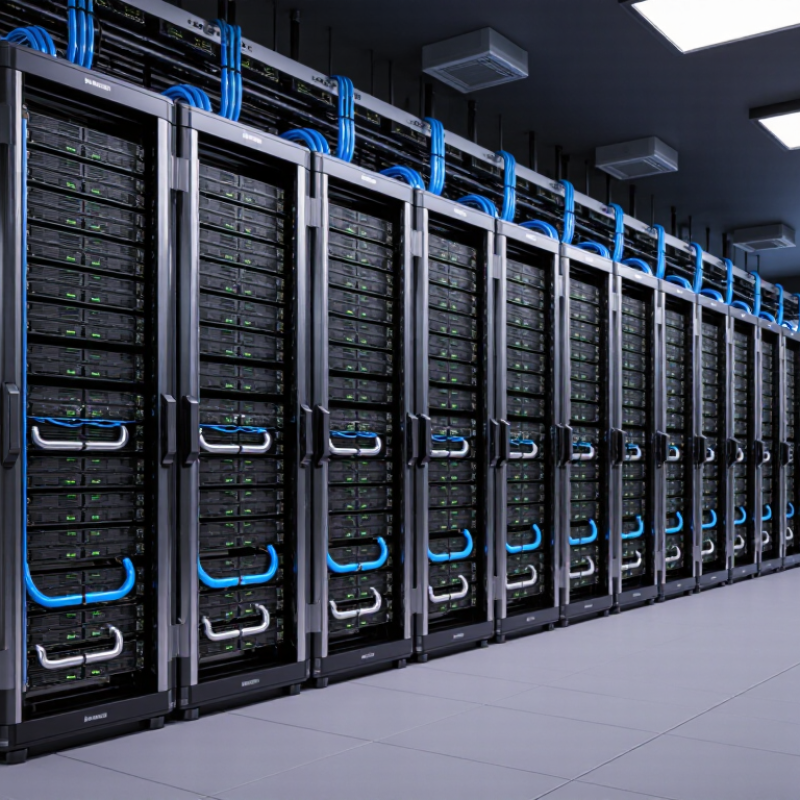
AI training servers are systems built to process large datasets and adjust model parameters through repeated computation. Their core components include accelerator processors, host CPUs, high-bandwidth memory, fast storage, and low-latency network connections. Power supplies and cooling matter just as much. A tightly packed rack can draw substantial power, while heat may limit sustained performance. The server is not merely a processor box; it is part of a coordinated cluster.
The market role is growing, but headline forecasts need context. IDC’s 2024 Worldwide AI and Generative AI Spending Guide projected global AI spending would reach $632 billion by 2028; that figure covers more than servers alone. The International Energy Agency’s Electricity 2024 report said data-center electricity use could reach about 1,000 terawatt-hours in 2026. That is not the whole story. Training workloads are only one source of demand, and real power use depends on utilization and cooling design. Buyers should compare measured throughput, memory capacity, network bandwidth, and energy use under sustained workloads—not just peak processor specifications. Still, specifications can mislead. A server that looks powerful on paper may waste energy if data movement or cooling becomes the bottleneck.
In 2026, AI training server manufacturing will depend on more than faster processors. Thermal design, high-speed networking, memory capacity, and power efficiency now shape real performance. Modern systems may combine liquid cooling with airflow tunnels around dense accelerator boards. This prevents hot spots near the rack’s upper section. It also reduces throttling during long model-training cycles. Yet no design is perfect. Cooling systems add maintenance needs, weight, and possible installation complexity.
Chiplet architecture is changing how manufacturers build scalable servers. Smaller processing units can connect through advanced packaging and high-bandwidth interconnects. This approach improves flexibility when workloads vary between language models, vision systems, and scientific simulations. High-bandwidth memory is equally important, because slow data movement can waste expensive computing capacity. Reliable monitoring software tracks temperature, power draw, memory errors, and network congestion in real time. In practice, integration remains difficult. Hardware may perform well in laboratories but behave differently inside crowded data centers.
Tips: Check performance per watt, not only peak speed. Ask for sustained benchmark results under realistic workloads. Inspect cooling service procedures and rack compatibility. Confirm whether spare parts can be replaced locally. A quieter server is not always a cooler server. Test it. Manufacturers that document failure rates, firmware updates, and validation methods usually demonstrate stronger engineering discipline. Still, buyers should question attractive efficiency claims until independent testing confirms them.
| Technology Area | Representative Server Design | Manufacturing Considerations | Impact on AI Training |
|---|---|---|---|
| Accelerator density | Multi-accelerator servers commonly use 4 or 8 accelerator modules, depending on the system design. | Requires high-current power delivery, carefully engineered board layouts, and serviceable module installation. | More accelerators can increase parallel compute capacity, provided memory bandwidth, networking, and cooling keep pace. |
| High-bandwidth accelerator memory | Accelerators use stacked high-bandwidth memory (HBM); capacity and bandwidth vary by accelerator generation and configuration. | HBM packaging and integration require precise assembly and thermal control around the accelerator package. | High memory bandwidth helps feed large models and reduce data-movement bottlenecks during training. |
| High-speed server interconnects | Accelerators communicate through high-speed links within a server, while PCI Express connects host processors, accelerators, and other devices. | Signal integrity, board routing, connectors, and retimer placement become increasingly important at higher link speeds. | Fast communication supports model parallelism and reduces time spent exchanging data between accelerators. |
| Cluster networking | Training clusters use high-bandwidth Ethernet fabrics, often with 100, 200, or 400 Gb/s links per port, depending on the deployment. | Network adapters, switches, cabling, and airflow or liquid-cooling plans must be coordinated across racks. | Low congestion and adequate network bandwidth help keep distributed training jobs supplied with data and synchronized. |
| Direct-to-chip liquid cooling | Cold plates circulate liquid to remove heat from high-power processors and accelerators; implementations may cool additional components. | Manufacturers must validate cold-plate contact, leak detection, tubing connections, coolant distribution, and service procedures. | Liquid cooling can remove heat more effectively than air alone in dense configurations, subject to facility water and heat-rejection design. |
| High-capacity power delivery | Power systems combine redundant power supplies, distribution boards, and rack-level power infrastructure sized for the server configuration. | Electrical design must account for peak load, conversion losses, protection, redundancy, and safe maintenance access. | Stable power delivery helps prevent throttling and supports reliable operation under sustained training workloads. |
| High-speed storage and data paths | NVMe solid-state drives and high-throughput network storage are used to stage datasets and training checkpoints. | Drive placement, thermal management, controller support, and storage-network bandwidth affect system integration. | Fast data access can reduce input stalls and shorten checkpoint save and restore times. |
| Modular, serviceable construction | Replaceable accelerator, fan, power, storage, and network modules are used where the platform design permits. | Consistent connectors, clear service access, and factory testing simplify assembly and field maintenance. | Faster repairs can improve cluster availability and reduce interruptions to long-running training jobs. |
| Factory validation and system testing | Production testing can include firmware checks, memory diagnostics, accelerator stress tests, network tests, and thermal validation. | Repeatable test procedures and traceable component records help identify defects before deployment. | Thorough validation reduces the risk of hardware faults disrupting multi-node training runs. |
| Representative industry design practices, not company rankings or market-share data. Configurations and performance vary by platform, workload, and data-center infrastructure. | |||
Leading AI training server manufacturers in 2026 are competing on more than accelerator speed. Buyers are examining memory bandwidth, liquid-cooling design, networking, firmware quality, and long-term service. A training rack may contain dense accelerator modules, high-speed interconnects, and power systems exceeding 30 kilowatts. Small thermal weaknesses can reduce performance.
The Stanford AI Index 2025 reports that training compute for notable AI models has grown rapidly, while hardware costs continue to influence research access. This trend favors manufacturers with strong system engineering, not only fast processors. The MLPerf Training benchmark also shows meaningful differences in time-to-convergence across complete systems. Raw chip specifications can mislead.
Reliability requires practical testing. Leading suppliers should provide validated configurations, remote monitoring, spare-part planning, and clear support agreements. The Uptime Institute’s industry research repeatedly links thermal management and power resilience with data-center availability. That matters during multi-day training runs. No ranking is perfect. A lower-priced server may consume more electricity, require extra cooling, or deliver weaker utilization. Buyers should compare completed workloads, energy per training job, and service response times. Procurement teams often overlook these details. That is the part worth questioning.
Comparing AI training server manufacturers starts with the workload, not the advertised accelerator count. A language model may need fast interconnects, large memory pools, and consistent multi-node performance. Computer vision workloads can value storage speed and flexible scaling more. Ask manufacturers for benchmark results using your model size, batch settings, and data pipeline. Measure real workloads. Generic scores can mislead.
Inspect the complete server design. Check accelerator memory, CPU balance, network bandwidth, storage endurance, and power limits. Thermal engineering matters in a crowded rack. A system that throttles after several hours may look impressive during a short demonstration. Request noise levels, cooling requirements, firmware policies, and replacement procedures. Also compare rack density, electricity costs, warranty coverage, and technical support response times. The cheapest purchase may become expensive during deployment.
Experienced teams should test a production-like cluster before signing a large order. Record training time, failure rates, recovery steps, and monitoring quality. Ask whether components can be upgraded without replacing the entire platform. Security controls, access management, and audit records deserve equal attention. Do not trust polished slides alone. Some vendors provide excellent hardware but weaker documentation. Others communicate well but lack stable supply. I have seen both problems. Leave room for uncertainty, and score each manufacturer against evidence rather than promises.
AI training server design is moving toward modular, liquid-cooled platforms. Future systems will support faster upgrades without replacing entire racks. This matters because accelerators, memory, and networking hardware now evolve at different speeds. Engineering teams increasingly need flexible chassis, swappable power units, and high-bandwidth interconnects. Heat remains stubborn. Direct-to-chip cooling can reduce fan noise and improve rack density, but it demands careful plumbing and leak monitoring. A small installation mistake may affect an entire training cluster.
Deployment will also become more distributed. Large data centers may handle foundation-model training, while regional facilities process sensitive datasets closer to users. This approach can reduce network delays and transfer costs. It also creates new operational challenges. Each site needs consistent firmware, security controls, and performance testing. Automated orchestration should balance workloads according to power availability, cooling capacity, and network congestion. However, automation is not always predictable. Engineers still need manual review when performance data looks unusual.
Energy efficiency will shape purchasing decisions as strongly as raw computing speed. Manufacturers are likely to improve power-aware scheduling, recyclable server components, and rack-level monitoring. Some designs may combine training and inference resources, increasing utilization throughout the day. That sounds efficient, but mixed workloads can create scheduling conflicts. Testing still matters. Buyers should examine real benchmark results, maintenance procedures, acoustic levels, and service response times before selecting a platform. The strongest designs may be less impressive on paper, yet more reliable during months of continuous operation.
It processes large datasets and adjusts model parameters through repeated computation. It works inside a coordinated cluster.
Accelerators provide heavy computation, while host processors manage system tasks. High-bandwidth memory, fast storage, and low-latency networking also matter.
Dense racks can consume substantial power and produce intense heat. Poor cooling may cause throttling during long training cycles.
No. Data movement, memory limits, network delays, or cooling bottlenecks can reduce real performance. Peak specifications can mislead.
Request sustained benchmark results using realistic workloads. Compare throughput, memory capacity, network bandwidth, and energy use.
Liquid cooling can reduce hot spots, fan noise, and performance loss. It may support higher rack density.
It adds plumbing, maintenance, weight, and leak-monitoring requirements. One installation mistake could affect an entire training cluster.
Modular platforms allow upgrades to accelerators, memory, or networking without replacing complete racks. Hardware changes at different speeds.
Regional facilities can process sensitive datasets closer to users. This may reduce network delays and transfer costs.
Check rack compatibility, service response times, spare-part availability, firmware procedures, and independent efficiency tests. Do not trust attractive claims blindly.
In 2026, AI training servers serve as the computing foundation for developing large language models, computer vision systems, scientific applications, and other data-intensive technologies. This article explains their definition, market role, and core components, including advanced processors, high-bandwidth memory, fast interconnects, storage, cooling systems, and power infrastructure. It also examines the key technologies shaping manufacturing, such as accelerated computing, modular architectures, liquid cooling, energy efficiency, and intelligent system management.
The article provides a practical framework for comparing an ai training server manufacturer and its products by evaluating performance, scalability, reliability, compatibility, service capabilities, total ownership cost, and deployment flexibility. It further explores future trends, including denser computing platforms, improved memory technologies, cloud-integrated infrastructure, sustainable designs, and automated resource management. Together, these insights help organizations understand the evolving AI training server market and make informed decisions for current and future computing needs.
